
n the modern world of “one-click” shopping and digital gift cards, the act of giving has become dangerously convenient—and occasionally, a little soul-less. We’ve all felt that pang of “gift anxiety”: the fear that a single item isn’t “enough,” or the worry that we haven’t quite captured the recipient’s personality.
Enter the gift hamper.
Once dismissed as a corporate cliché filled with dusty crackers and generic jam, the modern gift hamper has undergone a massive cultural glow-up. Today, it is a powerhouse of psychological impact. But what exactly happens in the human brain when we receive a curated bundle of goodies? Why does a collection of smaller items often outperform a single, high-ticket luxury gift?
Let’s dive into the fascinating psychology of gifting and discover why hampers are the ultimate tool for building connections.
1. The “Value Density” Effect
Psychologically, humans are prone to a phenomenon called Value Density. When we receive a single gift—say, a high-end watch—our brain processes it as one “event.” It is a significant event, but it is singular.
When a recipient opens a gift hamper, the brain experiences a rapid-fire succession of “micro-wins.” As they pull out a tin of artisanal coffee, then a bar of sea-salt chocolate, then a hand-poured candle, the brain’s reward system (the dopaminergic pathway) fires repeatedly.
Why this matters for SEO and Branding: From a consumer perspective, a hamper feels like “more for less.” Even if the total monetary value is the same as a single item, the perceived value is exponentially higher because of the variety and the time it takes to explore the gift.
2. The Power of Curation: “You Really Know Me”
The biggest hurdle in gifting is showing the recipient that you understand their inner world. A single gift is a gamble—if they don’t like that specific sweater, the gift is a “fail.”
A hamper, however, allows for thematic storytelling.
-
The “Home Chef” Hamper: Doesn’t just give them a bottle of olive oil; it gives them the oil, the balsamic glaze, the organic pasta, and the bamboo tongs.
-
The “New Parent” Hamper: Doesn’t just give a onesie; it gives the caffeine for the parents, the soothing lotion for the baby, and the milestone cards for the memories.
This curation signals high cognitive effort from the giver. In the psychology of relationships, effort is often equated with affection. By selecting a themed hamper, you are telling a story about who the recipient is and what they enjoy.
3. Solving the “Decision Paralysis” of Gifting
For the giver, the psychology is just as intense. We live in an era of Overchoice. Browsing a department store for “the perfect thing” can lead to decision fatigue, which often results in us buying nothing or buying something generic.
Hampers solve this by providing a curated framework. They offer the benefits of customization without the overwhelming stress of starting from a blank canvas. This is why “Build Your Own Hamper” features are exploding in the e-commerce space; they offer the “Illusion of Control”—the buyer feels like an artist, but the platform provides the palette.
4. The “Unboxing” Experience as a Ritual
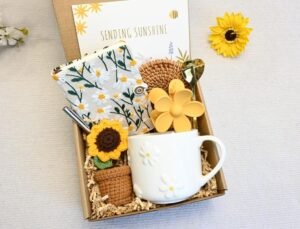
In the age of social media, the “unboxing” isn’t just a physical act; it’s a social ritual. A gift hamper is designed for the slow reveal.
-
Tactile Stimulation: The rustle of wood wool or shredded paper.
-
Visual Layers: The way items are nestled together to create a “landscape” of gifts.
-
Olfactory Surprise: The scent of lavender or fresh coffee hitting the nose the moment the lid is lifted.
This multi-sensory experience creates a much stronger “memory anchor” than a gift given in a standard gift bag. When multiple senses are engaged, the brain is more likely to store the experience as a significant, positive memory.
5. The “Reciprocity” Loop
Social psychology teaches us about the Law of Reciprocity. When someone does something nice for us, we feel a deep-seated need to return the favor.
Because a hamper looks substantial and thoughtfully put together, it strengthens the social bond more effectively than a “safe” gift like a gift card. It moves the relationship from a “transactional” level (I give you $20, you give me $20) to a “relational” level (I have considered your tastes and prepared a feast for your senses).
6. Why Hampers are “Anxiety-Proof”
One of the hidden psychological benefits of the hamper is Risk Mitigation.
If you give someone a single book and they’ve already read it, the gift-giving moment becomes awkward. If you give someone a “Bookworm’s Delight” hamper containing a book, a luxury bookmark, a bag of gourmet tea, and a reading light—even if they’ve read the book, the other three items ensure the gift is still a success.
It is a “fail-safe” gifting strategy that ensures the giver feels confident and the recipient feels pampered.
Summary for the Savvy Gifter
The success of the gift hamper isn’t a fluke; it’s a result of how our brains process variety, effort, and sensory input. By choosing a hamper, you aren’t just sending “stuff” in a box—you are sending a curated experience that triggers dopamine, reduces social anxiety, and reinforces your relationship.
Key Takeaways for Your Next Gift:
-
Focus on a Theme: Don’t just throw random items together; tell a story.
-
Engage the Senses: Ensure there is something to smell, taste, and touch.
-
Consider the “Slow Reveal”: The packaging is just as important as the contents