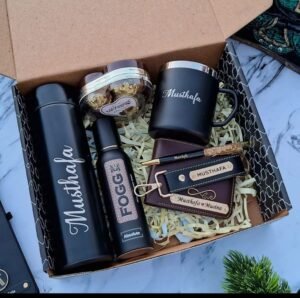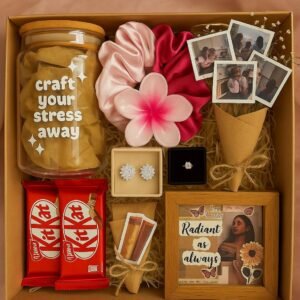
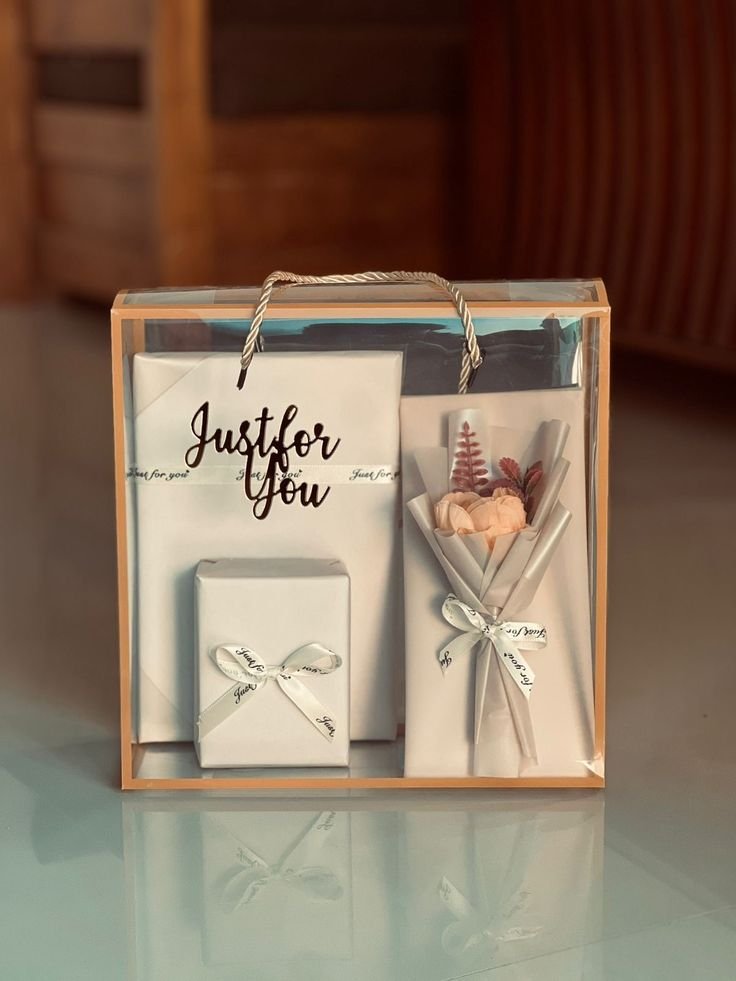
In the world of thoughtful gestures, the gift hamper reigns supreme. It is a cornucopia of delights, a curated experience, and a physical manifestation of “I was thinking of you.” But as soon as you decide to give a hamper, you are faced with a fundamental dilemma: Should you build Gift Hamper yourself (DIY) or buy it pre-curated from a professional?
This isn’t just a question of money; it’s a question of time, intent, and the “visual vocabulary” of your gift. In this deep dive, we will peel back the cellophane layers to see which option truly wins the gifting crown.
1. The Soul of DIY: Why We Love to Build
There is a specific psychological term for why we value things we make ourselves: The IKEA Effect. When we put labor into a project, we tend to value the result more highly. For a gift-giver, the DIY route is a labor of love.
The Personalization of gift hamper Advantage
In a pre-curated world, you are often stuck with “The Tea Lover’s Box” or “The Midnight Snack Kit.” While lovely, they are designed for the masses. When you go DIY, you have a “Target Audience of One.”
-
The Niche Preference: If your best friend only drinks a specific brand of small-batch kombucha found in one specific farmer’s market, a professional company can’t help you. You can.
-
The Inside Joke: You can include that specific bag of chips you both ate on a road trip in 2012. These “emotional anchors” are what turn a basket of items into a cherished memory.
The Creative High
For many, the act of sourcing a vintage wicker basket, choosing a color-coordinated ribbon, and arranging the items so they “cascade” perfectly is a form of art therapy. You aren’t just a consumer; you are a curator.
2. The Hidden Costs of DIY Gift Hamper(The “Efficiency Trap”)
Most people choose DIY because they believe it is the “cheaper” option. While you can save money on the individual contents by shopping sales, the packaging and logistics often bridge the price gap.
The “Single Unit” Tax
Professional hamper companies buy ribbon by the mile, boxes by the thousand, and wood wool by the ton. When you go to a craft store to buy:
-
A high-quality basket: $15–$25
-
A roll of premium cellophane: $8
-
A single spool of silk ribbon: $6
-
Filling/Padding: $5
-
Greeting Card: $7
Before you’ve even bought a single chocolate bar, you’ve spent nearly $45 on just the “shell.” Professional companies often bake these costs into a much lower margin because of their wholesale access.
The Shipping Nightmare
This is where DIY often fails. If you are hand-delivering the gift, DIY is great. If you need to mail it, you face the “Structural Integrity Challenge.” Professional hampers are drop-tested. They use custom inserts to ensure the wine bottle doesn’t smash the artisanal crackers. When you ship a DIY hamper, you often have to over-pack it with bubble wrap, which ruins the “unboxing aesthetic” when the recipient finally opens it.
3. The Pre-Curated Powerhouse: Why Professionals Win
If DIY is about the process, pre-curated hampers are about the result.
The “Boutique” Network
Professional gifting companies spend months scouting for vendors. They have access to “wholesale-only” brands—artisanal cheesemakers, small-batch chocolatiers, and high-end candle makers—that don’t sell on grocery store shelves. When you buy a pre-curated hamper, you are giving the recipient access to a world of luxury they wouldn’t find on a trip to the local mall.
Aesthetic Consistency
There is a science to “The Reveal.” Professionals use a technique called Triangulation—placing the tallest item in the back-center and tapering down to create a visual pyramid. They use color theory to ensure the packaging complements the product labels. This level of polish creates an immediate “Wow” factor that is difficult to replicate at home without professional-grade materials.
4. Corporate Context: When DIY is a Disaster
If you are sending 50 gifts to clients, DIY is a logistical suicide mission.
-
Brand Alignment: A professional company can subtly integrate your corporate branding into the ribbon or the card in a way that looks sophisticated, not tacky.
-
Tax Compliance: Professional invoices are much easier for accounting departments to process than 50 separate receipts from a grocery store and a craft shop.
-
Scalability: A professional can ensure that Client A and Client B receive the exact same level of quality, preventing any “gift envy” or perceived favoritism.
5. The Middle Ground: The “Semi-DIY” Approach
If you can’t decide, there is a third way. Many modern luxury gift sites now offer “Build Your Own” (BYO) modules.
-
The Benefit: You get the professional packaging, the wholesale-exclusive items, and the guaranteed safe shipping.
-
The Input: You still get to hand-pick every item that goes into the box.
This is often the most SEO-friendly and consumer-friendly option in 2026, as it balances the human need for “choice” with the modern need for “convenience.”
6. Practical Tips for Each Path
If you choose DIY:
-
Anchor your items: Use double-sided tape on the bottom of jars to keep them from sliding.
-
Vary the heights: Use “fillers” (like crumpled paper) under smaller items to bring them up to the level of taller items.
-
The “Rule of Three”: Stick to a 3-color palette (e.g., Cream, Gold, and Forest Green) to keep it looking expensive.
If you choose Pre-Curated:
-
Read the “What’s Inside” list carefully: Ensure there are no “filler” items (like cheap candy) used to bulk out the price.
-
Personalize the card: Since you didn’t build the box, the message in the card must do the heavy lifting. Make it specific and heartfelt.
Final Verdict
-
Choose DIY for: Your spouse, your parents, or a DIY-loving best friend where the “messy” charm is part of the gift.
-
Choose Pre-Curated for: Professional contacts, long-distance relatives, or when you want to guarantee a high-end, “Instagram-ready” aesthetic.